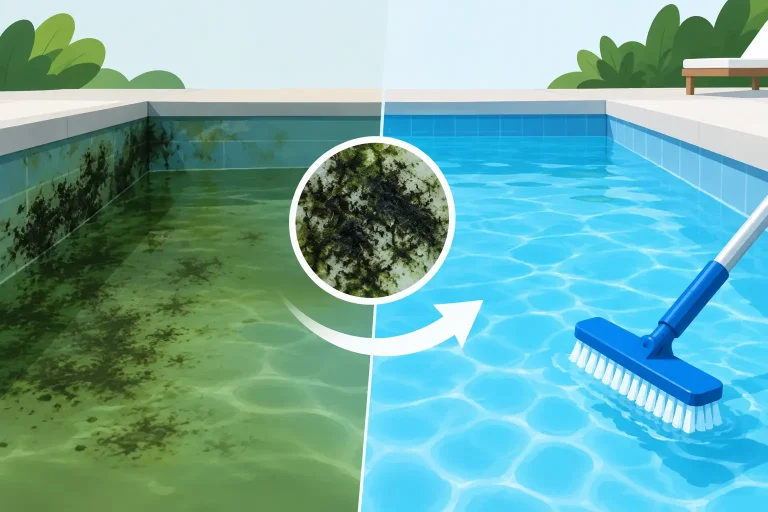
A pool can look clean at a glance while its filter is working far too hard behind the scenes. Pool filter cleaning removes the dirt, oils, pollen, algae particles, and fine debris that chlorine alone cannot handle. In Port St. Lucie, where pools run through long warm seasons and storms can send leaves and dust straight into the water, filter care is one of the practical steps that keeps a pool clear, comfortable, and ready to use.
A neglected filter does not always cause an immediate problem. More often, the warning signs build gradually: weaker returns, cloudy water after swimming, rising pressure, or chemicals that seem harder to balance. Cleaning the filter at the right time protects circulation, helps sanitation work as intended, and can reduce strain on the pump.
Why a Clean Filter Makes Such a Difference
Your pool filter is the system’s catch point. As water moves through it, the filter captures material too small for a skimmer basket or pool net to catch. That includes fine sand, dead algae, sunscreen residue, pollen, body oils, and debris stirred up by rain or heavy pool use.
When the filter media becomes loaded, water has a harder time moving through the system. The pump must work against that restriction, circulation slows, and dirt stays in the pool longer. Poor circulation also creates conditions where algae can gain a foothold, particularly during hot Florida weather.
A clean filter is not supposed to be spotless at all times. In fact, a light coating of debris can improve filtration in some systems. The goal is to clean it when flow and pressure show that it is becoming restrictive, not to overclean it on a fixed schedule without checking the equipment.
Know Your Pool Filter Type Before Cleaning
The correct pool filter cleaning method depends on the filter installed on your equipment pad. Using the wrong approach can damage the media or make the filter less effective.
Cartridge filters
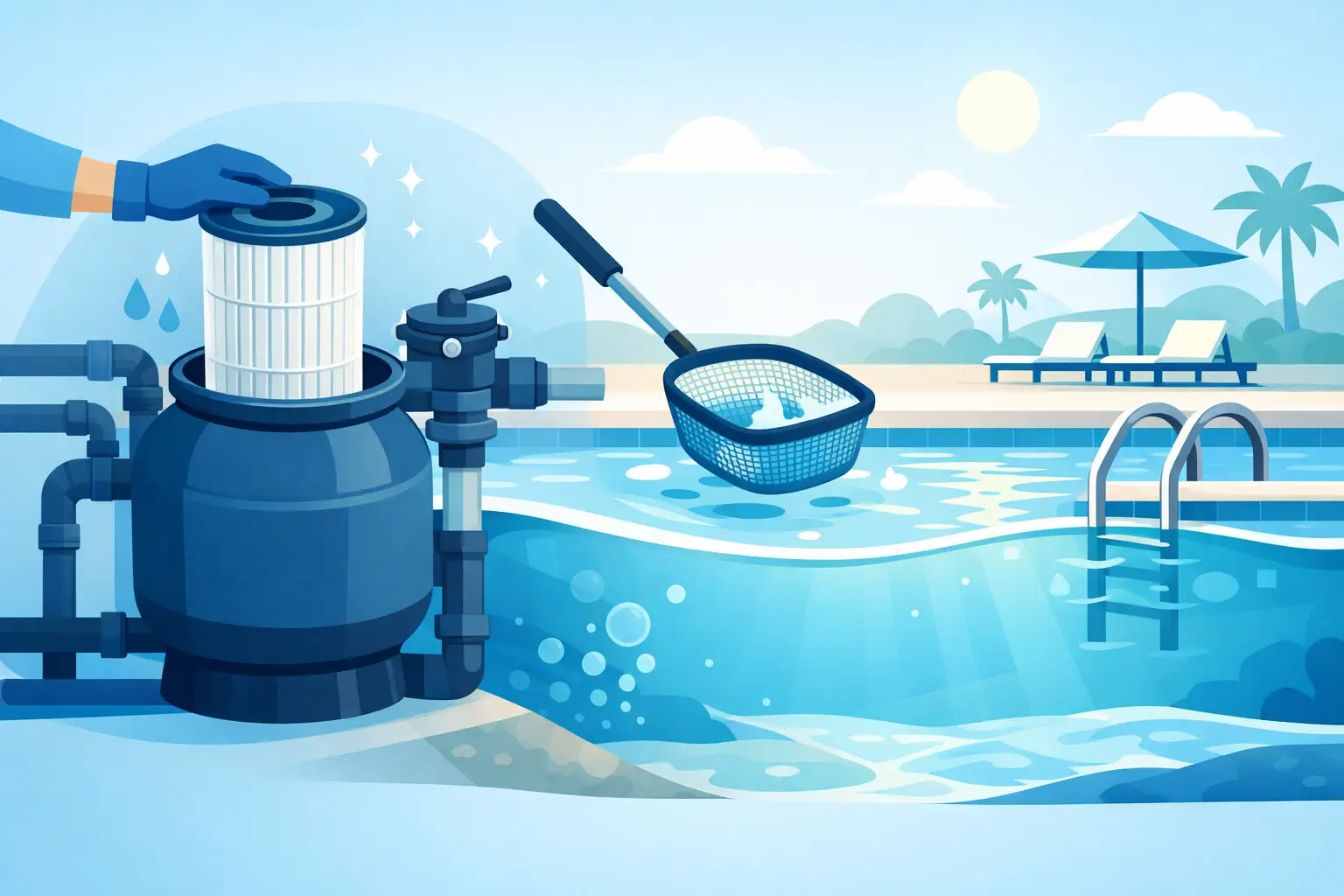
Cartridge filters use pleated fabric elements inside a tank. They are common in residential pools because they trap fine particles and do not require backwashing. To clean a cartridge, turn off the pump, release pressure from the tank, remove the cartridge, and rinse between the pleats with a garden hose. Use a moderate spray rather than a high-pressure nozzle that can tear or flatten the fabric.
Over time, cartridges collect oils, scale, and embedded debris that water alone will not remove. A filter-specific cleaning solution may be needed for a deeper clean. If the cartridge bands are broken, the pleats are flattened, or the material remains stained and restrictive after cleaning, replacement is usually the better choice.
Sand filters
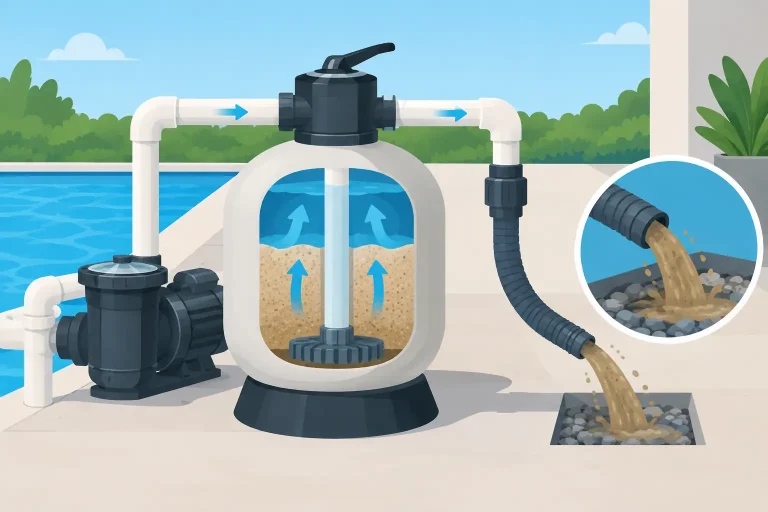
Sand filters push water through a bed of specialized filter sand. When pressure rises, the standard cleaning method is backwashing. This reverses water flow and sends trapped debris out through the waste line. After backwashing, the filter should be rinsed briefly before returning to normal filtration.
Backwashing too often wastes water and can prevent the sand bed from filtering at its best. Most sand filters need attention when the pressure gauge rises about 8 to 10 PSI above the normal clean operating pressure. The sand itself does not need frequent replacement, but it can eventually become compacted, channeled, or coated with oils and minerals.
DE filters
Diatomaceous earth, or DE, filters provide very fine filtration. They use grids or fingers coated with DE powder to capture tiny particles. Cleaning usually involves backwashing or opening the tank to rinse the grids, followed by adding the correct amount of fresh DE powder when the system is restarted.
Because DE powder and grids must be handled correctly, this type of filter benefits from careful service. Torn grids, damaged manifolds, or an incorrect DE charge can allow powder back into the pool or reduce filtration performance.
When Should You Clean the Filter?
The pressure gauge gives the clearest answer. After a thorough cleaning, note the filter’s normal PSI with the pump running. That number becomes your baseline. When the pressure climbs roughly 20 to 25 percent above it, the filter is likely ready for cleaning.
For example, a filter that normally runs at 16 PSI may need service around 20 PSI. The exact number depends on the plumbing, pump speed, filter size, and condition of the pool. A low pressure reading can also signal a problem, such as a clogged pump basket, a suction-side blockage, or low water level, so pressure should always be read in context.
In addition to the gauge, watch for four practical signs:
- Return jets feel weaker than usual.
- The water stays dull or cloudy despite proper chemistry.
- The pool turns green again soon after treatment.
- The pump is louder than normal or loses prime intermittently.
A heavy rain, landscaping work, a windstorm, or a green-pool recovery can load a filter much faster than normal. In those situations, waiting for the next routine maintenance visit may not make sense. The system may need to be checked and cleaned sooner.
A Safe Approach to Pool Filter Cleaning
Before opening any filter tank, shut off power to the pump at the breaker or timer. Never rely on a switch alone if someone else could turn the equipment on. Close valves if your plumbing setup requires it, open the air-relief valve, and wait until the pressure gauge reads zero before removing a clamp or lid.
Inspect the tank O-ring whenever the filter is opened. Wipe away dirt from the sealing surfaces and use an approved pool lubricant if the O-ring is dry. Do not use petroleum jelly, which can cause certain seals to swell or break down. Reassemble the tank evenly, secure the clamp according to the manufacturer’s guidance, and restart the pump with the air-relief valve open until a steady stream of water appears.
After cleaning, check for leaks around the lid, plumbing unions, drain plug, and pressure gauge. A small drip can turn into lost water, air entering the system, or corrosion at the equipment pad. It is also smart to write down the new clean pressure so the next service decision is based on a real baseline.
Common Filter Cleaning Mistakes
The most common mistake is cleaning too aggressively. Cartridge pleats can be damaged by pressure washers, stiff brushes, or sharp tools. Sand filters can lose efficiency when they are backwashed repeatedly without need. DE filters can perform poorly if the old material is not removed thoroughly or the replacement amount is guessed.
Another mistake is treating a dirty filter as the only cause of cloudy water. A clean filter cannot compensate for low sanitizer, poor pH balance, failing circulation equipment, or algae growing in protected areas of the pool. If the water remains cloudy after a proper cleaning, the pool needs a broader inspection of chemistry, run time, pump performance, and potential leaks.
Finally, do not ignore a filter that becomes dirty again unusually fast. That can point to an undersized filter, a worn cartridge, algae that has not been fully eliminated, a failing pump, or environmental debris entering the pool every day. The answer is not always more frequent cleaning. Sometimes the equipment or pool-care routine needs to change.
Let Filter Care Support the Whole Pool
Filter maintenance works best as part of consistent weekly care. Skimming, vacuuming, brushing, emptying baskets, balancing water, and monitoring circulation all reduce the load placed on the filter. This is especially valuable for seasonal residents and busy families who want clear water without trying to diagnose equipment changes between work, travel, and weekend plans.
Aqua Clear Florida Pools includes filter attention within a complete maintenance approach, so small performance changes can be addressed before they become cloudy water, algae growth, or an overworked pump. For pools with persistent issues, a hands-on inspection can identify whether the filter needs cleaning, repair, replacement media, or help from another part of the system.
The best time to think about your filter is before the water loses its sparkle. Keep an eye on pressure, pay attention to circulation, and give the equipment prompt care when it tells you it needs it.