Black algae rarely disappears because a pool owner adds one more dose of chlorine. A real black algae removal example usually starts with a frustrating pattern: the water may look clear, but dark blue-black spots keep returning along the plaster, steps, or corners. The problem is not always the water itself. It is the established growth attached to the pool surface.
For Florida pool owners, fast action matters. Warm water, strong sun, frequent rain, and heavy pool use can turn a few small spots into a recurring maintenance problem. The right approach combines physical removal, proper water chemistry, filtration, and follow-up visits. Skipping any one of those steps is often why black algae comes back.
What black algae looks like in a pool
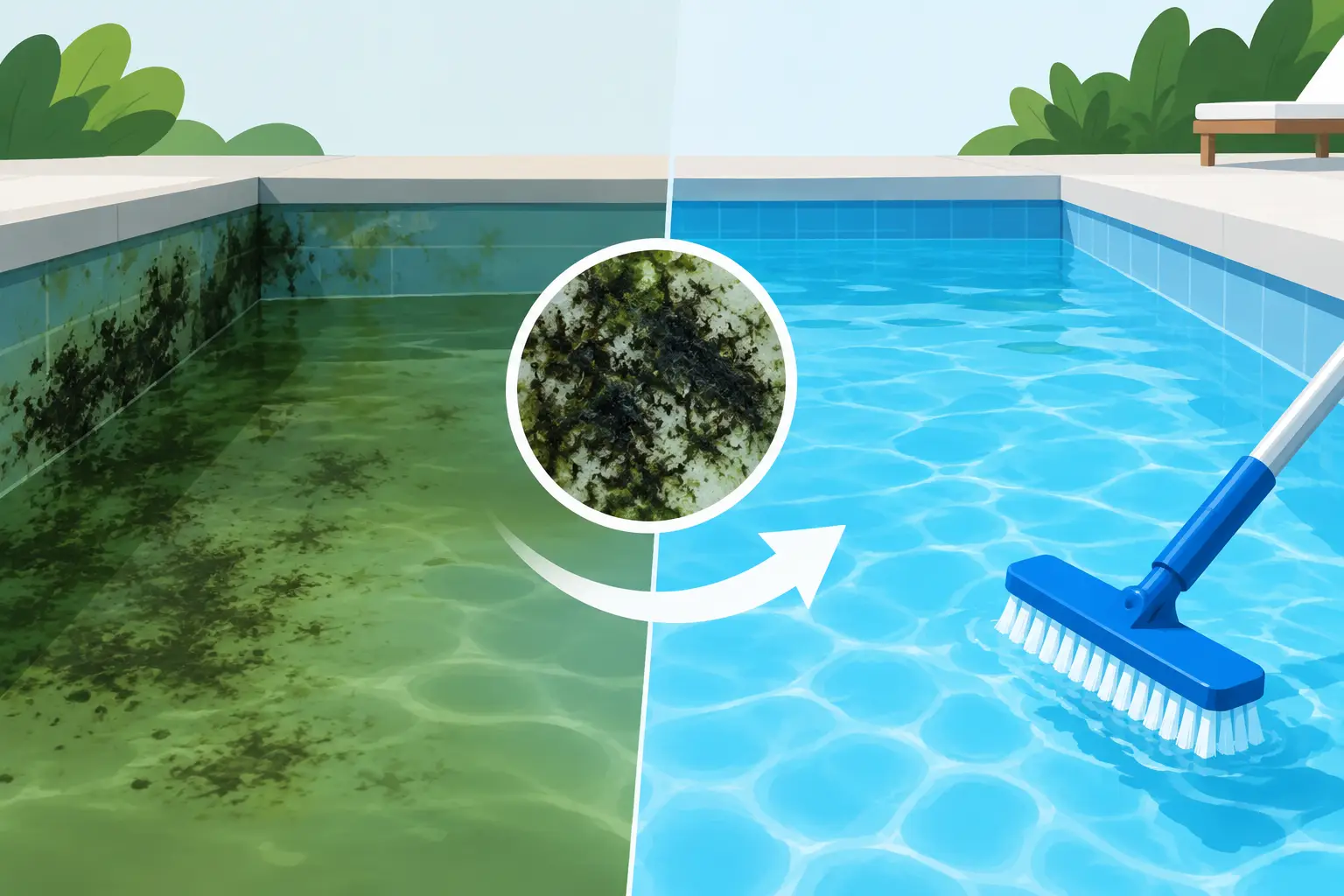
Black algae is commonly mistaken for dirt, staining, or ordinary green algae. It typically appears as small, raised spots that are dark green, blue-black, or nearly black. The spots are most common in plaster and concrete pools because the porous surface gives the growth somewhere to hold on.
Unlike loose debris, black algae will not brush away easily. It often has a hard outer layer that helps protect it from normal sanitizer levels. You may brush a spot until it looks lighter, then see it darken again a few days later. That is a strong sign the underlying roots were not fully treated.
This issue is less common in fiberglass and vinyl pools, but dark spots still deserve a professional look. Aggressive brushing or incorrect chemical use can damage softer surfaces, so treatment always depends on the pool finish.
A black algae removal example from a plaster pool
Consider a typical Port St. Lucie backyard pool: a white plaster finish, screened enclosure, and several dark spots around the deep-end return, on the steps, and near the tile line. The homeowner had been maintaining chlorine tablets in a feeder and shocking the pool occasionally. The water was clear enough to swim in, but the black spots had returned twice over several months.
The first step was not adding chemicals. It was testing the water and inspecting the pool system. In this case, the sanitizer level was low for the pool’s stabilizer reading, the pH was slightly high, and the filter had not been cleaned recently. Those conditions did not create black algae by themselves, but they made it harder to eliminate.
The treatment began with a thorough brushing using a brush appropriate for plaster. Each visible spot was brushed firmly to break its protective layer and expose the growth underneath. This is the labor-intensive part of black algae treatment, and it cannot be replaced by simply pouring in more chlorine.
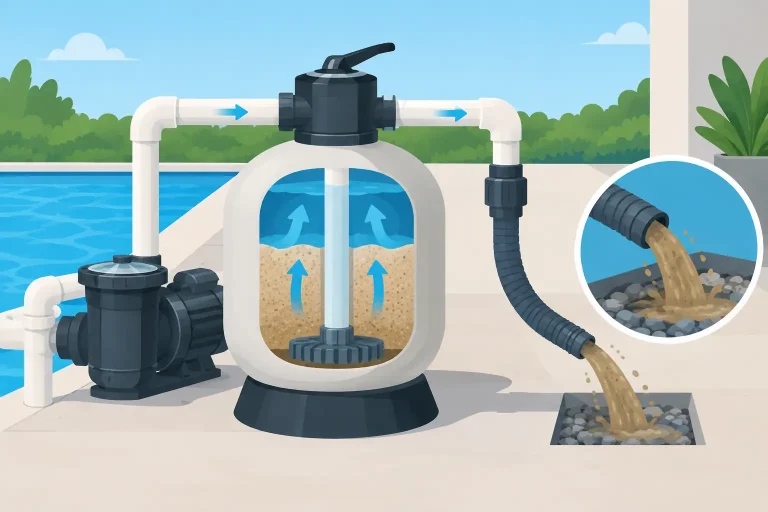
After brushing, the pool received a targeted sanitizer treatment based on its size and current water chemistry. The pump was kept running to circulate the treated water, and the filter was monitored because dead algae and debris can quickly reduce flow. The technician also brushed the affected areas again during follow-up service rather than assuming the first treatment had solved the problem.
Within a few days, many spots had faded from black to gray or greenish brown. That was progress, but not the finish line. A second brushing and treatment addressed the remaining roots. Once the spots no longer returned after brushing and the chemistry held steady, the pool moved into prevention mode with consistent service, balanced water, and regular filter care.
The result was a clean plaster surface and clear water, but the more valuable result was stopping the cycle of spot treatment followed by regrowth.
Why black algae treatment takes more than one visit
Black algae has a reputation for being stubborn because it behaves differently from a simple green-water bloom. Green algae can often suspend in the water, making it easier for chlorine and filtration to clear after a corrective treatment. Black algae attaches to the pool wall and forms a barrier over the active growth beneath it.
That means a one-time treatment can make the spots look better without fully removing them. If brushing does not open the surface, chemicals may not reach the growth effectively. If water circulation is poor, treated water may not move through corners and steps where algae tends to establish itself. If the filter is dirty, it cannot efficiently capture what brushing releases.
A reliable plan addresses all three conditions. The spots must be physically disrupted, the water must hold an effective sanitizer level, and the circulation system must operate correctly. Depending on the severity, this may take several service visits and repeated inspection.
What homeowners should avoid
Black algae can lead people to use too much of the wrong product too quickly. That can create a second problem, including etched plaster, damaged equipment, surface discoloration, or badly unbalanced water.
Avoid scraping plaster with metal tools or using a harsh brush on a vinyl or fiberglass surface. Do not mix pool chemicals, apply them directly to a surface unless the product instructions specifically allow it, or guess at dosing based on how dark the spots look. More chemical is not always better.
It is also wise to avoid swimming until the water has been tested and returned to safe operating levels. A pool that looks clear is not automatically balanced or ready for swimmers.
When the dark spot may be a stain instead
Not every black mark is black algae. Metal stains, organic stains, calcium deposits, and surface defects can all look similar from the deck. A stain is usually flat and may not change much when brushed. Black algae is more likely to feel raised or textured and may smear, lighten, or reveal a green tone when aggressively brushed.
There is a trade-off in treating uncertain spots as algae. Brushing and sanitizer treatment may help if it is algae, but they will not remove a metal stain. Repeated chemical treatments for a stain can waste time and put unnecessary stress on the pool water.
A hands-on inspection can determine whether the pool needs algae treatment, stain treatment, an acid wash, or a different restoration service. This is especially useful for older plaster pools with widespread discoloration, rough texture, or several types of staining at once.
Keeping black algae from returning
Once black algae is removed, routine care is what protects the investment. Pool water needs consistent sanitizer, balanced pH and alkalinity, good circulation, and a clean filter. Brushing matters too, particularly in steps, benches, corners, and areas with limited water movement.
For homeowners who travel, manage rental properties, or simply do not want to test and brush every week, professional maintenance provides an extra layer of protection. Aqua Clear Florida Pools checks the conditions that often lead to repeat algae issues while keeping the pool clean, balanced, and ready to use.
Watch for early warning signs: small dark dots that resist brushing, cloudy water after rain, weak return flow, rising filter pressure, or sanitizer that drops faster than usual. Calling early is usually easier and less expensive than waiting for spots to spread across the finish.
A black algae problem is frustrating, but it is manageable when the treatment matches the cause. If a dark spot keeps returning after ordinary shocking and brushing, treat it as a signal to inspect the surface, chemistry, and circulation together. Clear water is the goal, but a pool that stays clear is the real win.