
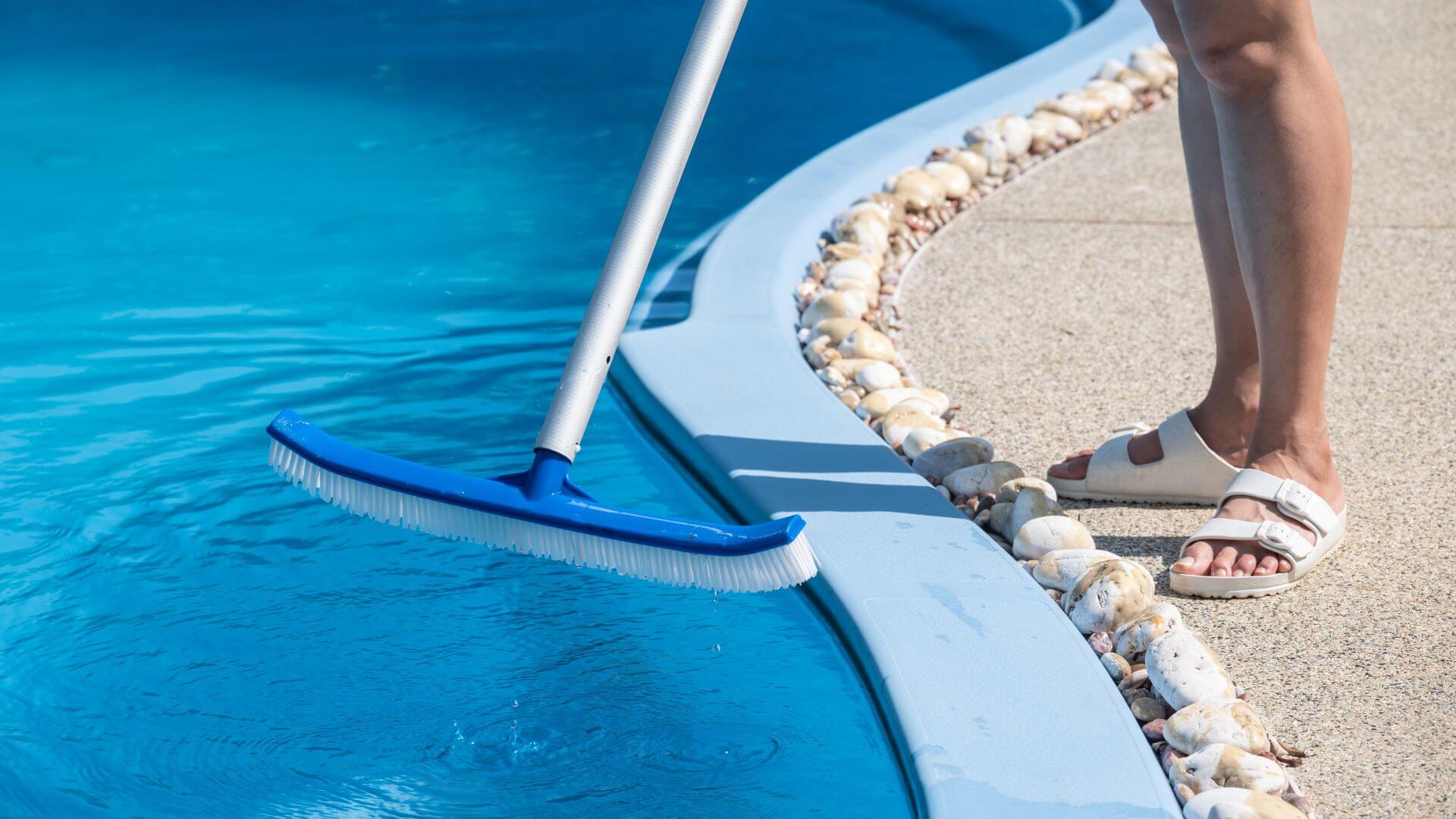
A swimming pool does not always fail dramatically when maintenance starts falling behind. More often, the warning signs appear gradually. Water becomes harder to keep clear, chlorine disappears faster than usual, algae returns in the same areas, filter pressure changes or circulation begins to weaken. These symptoms can seem minor at first, but together they often indicate that the pool needs more than an occasional DIY adjustment.
Florida pools are especially sensitive to inconsistent maintenance because strong sunlight, heat, heavy rain, storms, debris and frequent swimming all place extra demand on the water and equipment. A pool that remains stable during a mild week can become difficult to manage after several days of hot weather or repeated rainfall. That is why recognising early signs matters. The sooner the underlying cause is identified, the easier it is to prevent a manageable issue from turning into green water, equipment stress or repeated chemical corrections.
This guide explains the most common signs that a Florida pool may need professional maintenance, how to tell the difference between a temporary issue and a recurring problem, and when routine service may make more sense than continuing to troubleshoot the same symptoms yourself.
If your pool is already becoming difficult to keep stable, Aqua Clear FL Pools provides weekly pool maintenance in Port St. Lucie with routine cleaning, water testing, balancing and ongoing pool care.
Your Pool Water Keeps Turning Cloudy
Cloudy water is one of the most obvious signs that something in the maintenance routine is no longer working as it should. The cause may involve chemistry, filtration, circulation, heavy swimmer use or developing algae. Because several issues can create the same visual symptom, repeatedly adding clarifier or chlorine without diagnosing the cause may only provide temporary improvement.
A pool that clears after one adjustment and then becomes cloudy again within a short period deserves a closer look. Persistent cloudiness may indicate that the filter is not removing suspended particles effectively, the pump is not circulating enough water, sanitizer levels are unstable or debris and organic material are entering the pool faster than the system can handle them.
The important pattern is recurrence. One cloudy day after a storm may be understandable. A pool that repeatedly becomes cloudy despite regular DIY care is signalling that the overall maintenance system needs attention.
Our Florida pool cleaning and filter maintenance guide explains how filtration, circulation and physical cleaning work together to support clear water.
Algae Keeps Coming Back
Recurring algae is another strong sign that routine maintenance is not fully controlling the pool. Green, yellow or dark growth may disappear after treatment and then return because the original cause was never corrected.
Low chlorine is a common reason algae develops, but it is not the only one. Poor circulation, high CYA, dirty filters, insufficient brushing and repeated heavy rainfall can all contribute. If algae appears in the same corners or steps again and again, circulation may also be weaker in those areas.
A professional maintenance routine can help identify whether the problem is chemistry, filtration, circulation or a combination of several factors. That is often more effective than treating each outbreak separately.
For more detail, see our pool algae prevention and treatment guide.
Chlorine Will Not Stay at a Stable Level
If chlorine keeps dropping much faster than expected, the pool may be dealing with more demand than the current maintenance routine can handle. Strong Florida sunlight can reduce available chlorine, while heavy swimming, organic debris, rain and developing algae can increase consumption.
CYA also matters because too little stabilizer can allow chlorine to break down quickly in sunlight, while too much can make chlorine management more difficult. This is why simply adding more sanitizer may not solve the problem.
When chlorine loss becomes a repeating pattern, the pool should be evaluated as a complete system. Chemistry, circulation, filtration and environmental conditions all need to be considered together.
Our guide on low pool chlorine explains the common reasons sanitizer levels become difficult to maintain.
pH Keeps Moving Out of Range
Repeated pH problems are another sign that the pool may need closer maintenance. Homeowners often adjust pH successfully, only to see it rise or fall again within a short period. When that happens, the problem may involve alkalinity, aeration, chemical additions or other water-balance factors.
Correcting pH repeatedly without understanding why it is moving can create a cycle of unnecessary chemical use. The better approach is to look at total alkalinity and the rest of the chemistry together.
If pH is constantly changing, professional testing can help identify the pattern and reduce the need for repeated corrections. Our high pool pH guide explains some of the most common causes.
The Pool Requires More Chemicals Than It Used To
A noticeable increase in chemical use can be a sign that something in the pool has changed. More chlorine may be needed because of stronger sunlight, swimmer activity, algae or organic debris. Repeated acid additions may point toward persistent pH movement. Frequent clarifier use may indicate that the filter is struggling.
The important question is whether the increase matches a temporary change in conditions or has become the new normal. If chemical use keeps rising without an obvious reason, the pool may need a broader evaluation.
Professional maintenance can help reduce unnecessary product use by identifying the cause before more chemicals are added. The goal should be stable water, not constant correction.
Filter Pressure Is Frequently Too High or Too Low
Filter pressure is one of the most useful indicators of circulation and filtration performance. A normal pressure reading varies between pools, which is why the best comparison is your own clean baseline.
If pressure rises significantly and remains high even after cleaning, there may be a restriction in the filter or another part of the circulation system. If pressure becomes unusually low, the pump may not be receiving enough water because of clogged baskets, low water level or a suction issue.
Repeated abnormal pressure readings suggest that something needs more than routine cleaning. The filter, pump and plumbing should be evaluated together rather than assuming one component is responsible.
If the filter itself may be failing, see our guide on signs your pool filter needs replacement.
Return Jets Feel Weaker Than Normal
Weak return flow means the system is not moving water as effectively as it normally does. The cause could be a clogged basket, dirty filter, valve issue, low water level or pump problem.
When circulation drops, filtration also becomes less effective and sanitizer may not distribute evenly across the pool. This can allow debris and algae to build up in low-flow areas.
If basic cleaning does not restore normal flow, the issue should be investigated before the pool begins developing secondary problems such as cloudiness or algae.
The Pump Starts Making Unusual Noises
Most homeowners become familiar with the normal sound of their pool equipment. Grinding, rattling, squealing or a noticeable increase in pump noise can indicate that something has changed.
The cause may be simple, such as restricted water flow or air entering the system, but persistent noise can also point toward internal wear. Continuing to run the pump without identifying the reason may lead to a larger repair.
Routine maintenance can help identify when the problem is caused by baskets, water level or circulation. If the noise remains, Aqua Clear FL Pools provides pool equipment repair for issues beyond normal maintenance.
You Notice Air in the Pump Basket or Return Jets
Air inside the circulation system can indicate that water is not entering the pump normally. Low water level, loose pump lids, damaged seals or suction-side leaks are all possible causes.
A small amount of air may not immediately stop the system from working, but persistent air can interfere with circulation and pump performance. If the problem keeps returning after the obvious causes are checked, professional diagnosis may be appropriate.
The Pool Water Level Is Dropping Faster Than Expected
Some water loss is normal because of evaporation, splash-out and backwashing. In Florida, evaporation rates also change with temperature, wind and humidity. However, a pool that suddenly needs much more refill water than usual may have a leak.
Regular maintenance makes this easier to notice because the normal water level becomes familiar. If the water continues dropping despite similar weather conditions, the pool or equipment should be checked more closely.
Ignoring gradual water loss can increase water use and may allow a small leak to become worse over time.
Leaves and Debris Keep Building Up Despite Regular Cleaning
If debris accumulates faster than the maintenance routine can handle, baskets, filtration and cleaning frequency may need to be adjusted. This is especially common during stormy or windy periods in Florida.
Large amounts of debris increase sanitizer demand, block baskets and place additional load on the filter. If the pool is constantly behind on debris removal, one weekly cleaning may not be enough during certain periods.
A professional service can adjust the routine based on actual pool conditions rather than following the exact same process every week.
The Pool Becomes Difficult to Manage After Every Storm
Heavy Florida rain can dilute chemistry, introduce debris, raise the water level and place additional demand on the filtration system. A well-maintained pool should still be monitored after storms, but it should not repeatedly collapse into cloudy or green water after ordinary rainfall.
If every storm creates a major cleanup, there may be an underlying issue with chlorine stability, circulation, filtration or maintenance timing. The pool may be entering storms already close to the edge of its normal range.
Our guide on pool care after heavy rain in Florida explains what to check after significant rainfall.
Stains or Scale Keep Appearing
Recurring stains or scale can indicate that water chemistry or mineral balance is not being managed consistently. High pH and calcium conditions can contribute to scale, while organic debris or metals may contribute to staining.
Repeatedly treating the surface without correcting the water may allow the same problem to return. A professional maintenance routine can help identify whether the issue is chemistry-related before aggressive treatments are used.
The Pool Walls Feel Slippery
Slippery walls can be an early sign of algae or organic buildup even when the water still looks clear. This is why physical inspection matters in addition to visual water clarity.
If brushing removes the film but it returns quickly, sanitizer, circulation or brushing frequency may need to be reviewed. Waiting until the pool turns visibly green makes the problem much harder to manage.
You Are Cleaning the Filter More Often Than Before
A filter that suddenly requires frequent servicing can indicate that the pool is collecting more debris, dealing with algae or experiencing a filtration problem.
One unusually dirty period after a storm may be normal. A persistent change in cleaning frequency without an obvious reason suggests that something in the system has changed.
The filter media, circulation and pool conditions should be evaluated before continuing to clean the filter more and more often.
The Pool Keeps Turning Green Shortly After Treatment
A pool that turns green again soon after treatment usually has an unresolved underlying problem. Chlorine may be falling too low, CYA may be interfering with sanitation, circulation may be poor or algae may remain in low-flow areas.
Repeating the same chemical treatment without diagnosing the reason for recurrence can become expensive and frustrating. At that point, a more complete maintenance approach is usually more useful than another isolated shock treatment.
If the pool is already heavily green, Aqua Clear FL Pools also provides pool algae removal.
You Spend More Time Fixing the Pool Than Enjoying It
Sometimes the clearest sign that professional maintenance makes sense is simply the amount of time the pool is consuming. If every weekend involves adjusting chemicals, cleaning filters, fighting algae or troubleshooting circulation, the maintenance routine may no longer be practical.
DIY pool care can work well for homeowners who enjoy managing the system and can remain consistent. Professional maintenance becomes more useful when the same problems keep returning or when the time required to maintain the pool outweighs the benefit of doing it yourself.
You Keep Buying Products for the Same Problem
If you repeatedly purchase clarifier, shock, algaecide, stain treatment or other products for the same recurring symptom, it is worth questioning whether the product is addressing the actual cause.
A cloudy pool may need better filtration rather than more clarifier. Repeated algae may need circulation or chlorine correction rather than another algaecide. High pH may involve alkalinity rather than repeated acid additions.
Our guide on choosing the right pool cleaning products explains why diagnosis should come before product selection.
Your Maintenance Routine No Longer Matches Florida Conditions
A routine that worked during cooler weather may not work during summer. Strong sunlight, heavy swimming and repeated storms can all increase the demands placed on the pool.
If the pool becomes difficult to manage only during certain seasons, the maintenance schedule may need to change rather than using the same pump runtime, cleaning frequency and chemical routine all year.
Our guide on preparing your pool for seasonal changes in Florida explains how maintenance needs can shift throughout the year.
You Are Unsure Whether the Problem Is Maintenance or Equipment
Another sign professional help may be useful is when it becomes difficult to tell whether a problem is caused by water care or mechanical equipment. Weak flow could be a dirty filter or a pump issue. Cloudy water could be chemistry, filtration or algae. High filter pressure could be debris or a deeper circulation problem.
When several symptoms overlap, repeatedly changing chemicals or cleaning equipment without a clear diagnosis can waste time and make troubleshooting harder.
A professional evaluation can help separate routine maintenance issues from problems that require equipment repair.
When a One-Time Correction May Be Enough
Not every pool problem means weekly professional service is necessary. A temporary issue caused by a storm, missed maintenance visit or one-time chemistry mistake may be corrected and remain stable afterwards.
If the pool returns to normal and stays there, the issue may have been isolated. The more important warning sign is recurrence. When the same cloudy water, algae, pressure problem or chemical imbalance keeps returning, the maintenance system itself needs attention.
When Weekly Pool Maintenance Makes More Sense
Weekly service becomes more practical when the pool requires consistent testing, cleaning and observation to remain stable. This is especially true for pools exposed to heavy debris, frequent swimming, Florida storms or recurring chemistry problems.
Regular service allows small changes to be corrected before they become visible problems. It also creates a consistent baseline for pressure, water clarity, chemistry and equipment behaviour, making developing issues easier to identify.
Aqua Clear FL Pools provides weekly pool maintenance in Port St. Lucie for homeowners who want predictable ongoing care rather than repeated troubleshooting.
Do Not Wait for a Small Problem to Become a Major Pool Issue
The most useful signs of a maintenance problem are often the ones that repeat. One cloudy day, one unusual chlorine reading or one filter-pressure change may not be serious. When those symptoms keep returning, they are telling you that something in the pool's normal routine is no longer working properly.
Pay attention to water clarity, chemistry stability, circulation, filter pressure, algae, water level and equipment behaviour. These signals can help you identify whether the pool simply needs a routine adjustment or whether it would benefit from a more consistent professional maintenance programme.
If maintaining your pool is becoming increasingly time-consuming or the same problems keep coming back, Aqua Clear FL Pools can help establish a more consistent routine.
Request a pool service quote or learn more about our weekly pool maintenance in Port St. Lucie.


