
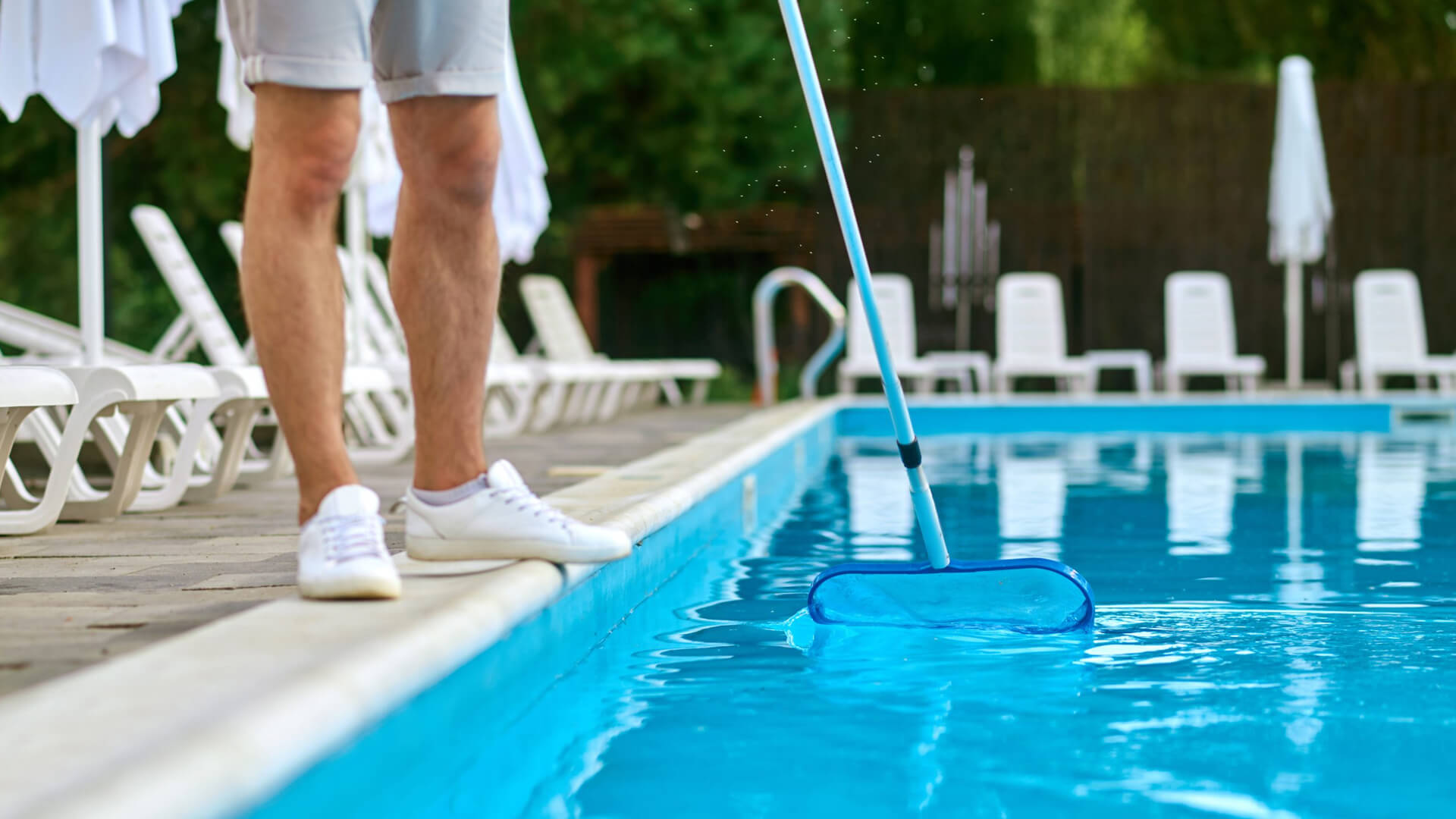
Florida weather can change the condition of a swimming pool faster than many homeowners expect. Strong sunlight, high temperatures, sudden rain, tropical storms, humidity, windblown debris and year-round pool use all affect how often a pool needs to be cleaned, tested and adjusted. A pool that stays balanced during a mild week may require much more attention after several days of intense heat or a major storm.
This is why Florida pool maintenance should not follow the exact same routine every week of the year. The core tasks remain consistent, but the frequency and intensity of cleaning, filtration and water testing may need to change with the weather. During hot summer periods, chlorine demand may increase. Heavy rain can dilute chemistry and introduce contaminants. Storms can overload skimmer baskets and filters with debris. Even winter can create maintenance problems when homeowners assume cooler temperatures mean the pool can be ignored.
The most effective approach is to understand how different weather conditions affect the entire pool system. Chemistry, circulation, filtration and cleaning all respond to environmental changes, and maintaining them together is much easier than waiting until the water becomes cloudy, green or difficult to balance.
If you prefer to have these changes monitored as part of a consistent service schedule, Aqua Clear FL Pools provides weekly pool maintenance in Port St. Lucie for homeowners who want regular cleaning, water testing and ongoing pool care.
Why Florida Weather Has Such a Strong Effect on Pools
Florida pools are exposed to environmental conditions that can change rapidly throughout the year. High temperatures increase biological activity and can make algae more aggressive when sanitizer levels fall. Strong sunlight can break down chlorine more quickly, while heavy rainfall can dilute chemical concentrations and raise the water level. Wind carries leaves, pollen, insects and fine debris into the pool, placing additional demand on both the sanitizer and filtration system.
These factors often occur together. A hot week may include strong sunlight, several afternoon thunderstorms and heavy swimming. During that same period, the pool may lose chlorine faster, collect more debris and require longer filtration or additional cleaning. Homeowners who treat these issues separately may find themselves constantly reacting to one problem after another.
The better approach is to recognise weather as part of the maintenance cycle. When conditions change, the pool may need closer monitoring. Testing water after storms, checking baskets after windy days and paying attention to circulation during hot weather can prevent small issues from becoming major problems.
How Florida Sunlight Affects Pool Water
Strong sunlight is one of the most important factors affecting outdoor pools in Florida. Ultraviolet exposure can reduce available chlorine, which means sanitizer levels may fall faster during long periods of direct sun.
This can become particularly noticeable during summer when days are longer and water temperatures are higher. If chlorine falls too low, algae can begin developing quickly, especially when the pool is also dealing with organic debris or heavy swimmer use.
Cyanuric acid, commonly known as CYA or stabilizer, helps protect chlorine from rapid UV degradation. However, too much stabilizer can also create problems, which means the goal is not simply to keep adding more. Chlorine and CYA need to be managed together.
If your pool repeatedly struggles to hold chlorine during hot, sunny weather, our guide on low chlorine in Florida pools explains the common causes in more detail.
How Heat Changes Pool Maintenance Needs
Higher water temperatures can make a pool more demanding to maintain. Warm water can increase chlorine demand and create more favourable conditions for algae, particularly when sanitizer levels are already marginal.
Hot weather also increases evaporation. As water evaporates, some dissolved minerals remain behind, which can gradually influence overall water balance. If large amounts of replacement water are added regularly, that can also alter chemistry depending on the source water.
Swimming activity usually increases during hot weather as well. More swimmers introduce sunscreen, body oils, sweat and other organic material that chlorine must process. This means the pool may experience more demand at the same time that sunlight is already reducing sanitizer.
The practical result is that summer maintenance often needs to be more responsive. Water should be tested regularly, debris should be removed promptly and the filtration system should be monitored closely for signs that it is struggling to keep up.
What Heavy Rain Does to a Florida Pool
Heavy rain can affect both the chemistry and physical condition of the pool. Rainwater dilutes the existing water, which may lower the concentration of chlorine and other chemicals. Wind and runoff can also introduce dirt, leaves, pollen and other contaminants that increase chlorine demand.
The pool water level may rise significantly during a major storm. When the level becomes too high, the skimmer may not function as efficiently because surface water is no longer entering the opening in the same way. This can reduce surface cleaning until the water level returns to normal.
Rain may also change pH and alkalinity, but the exact result varies depending on the existing chemistry, amount of rainfall and source water conditions. This is why adding chemicals automatically after every storm is not ideal. Testing should come first.
After substantial rainfall, remove visible debris, check baskets, make sure circulation is working properly and test the water before making adjustments. Our dedicated guide on what to do to your pool after heavy rain in Florida explains this process in greater detail.
Why Storms Increase Algae Risk
Rain itself does not automatically cause algae, but storm conditions can create an environment where algae develops more easily. Chlorine may become diluted, organic material may enter the pool and circulation can become restricted if baskets or filters fill with debris.
If the pool was already near the lower end of its normal sanitizer level before the storm, the additional demand may push it below what is needed to keep algae under control. Warm water then allows algae to spread quickly.
This is why pools sometimes appear to turn green shortly after periods of heavy rain. The problem is usually not the rain alone, but the combination of dilution, debris, sanitizer loss and poor circulation.
Our pool algae prevention and treatment guide explains how these factors interact and what to check when algae becomes a recurring problem.
What Wind Does to Pool Cleaning and Filtration
Wind can significantly increase the amount of debris entering an outdoor pool. Leaves, small branches, insects, grass clippings, pollen and fine dirt can all accumulate quickly during windy weather.
Large debris should be removed before it has time to sink or block the skimmer basket. Once organic material begins breaking down in the water, it increases sanitizer demand and may contribute to staining or algae growth.
Fine debris places additional demand on the filter. A pool may therefore require earlier filter maintenance after several windy days, even if the normal cleaning schedule has not yet arrived.
Pools surrounded by trees or landscaping usually experience more of this problem than screened pools, but screened enclosures do not eliminate it entirely. Fine dust and pollen can still enter and accumulate over time.
Florida Summer Pool Maintenance
Summer is usually the most demanding season for pool maintenance in Florida. High temperatures, intense sunlight, frequent storms and heavy pool use can all increase the amount of work required to keep the water stable.
During summer, chlorine should be monitored carefully because both sunlight and swimmer activity can increase demand. Algae prevention also becomes more important because warm water allows growth to accelerate when sanitizer levels fall.
Cleaning may need to be more frequent because afternoon storms and wind can introduce debris. Filter performance should also be monitored closely because the system may be handling more suspended material than during quieter periods.
Pump and circulation settings may need to be reviewed if the pool struggles to remain clear, although runtime should be based on the actual pool and equipment rather than a generic number. Our guide on how long to run a pool pump in Florida covers that topic in more detail.
Should You Change Pool Maintenance During Florida Winter?
Florida winters are mild compared with many other parts of the country, but that does not mean pool maintenance can stop. Water temperatures may fall and swimmer use may decrease, yet debris, chemistry changes and filtration needs continue.
Chlorine demand may sometimes decrease during cooler periods, but the pool should still be tested regularly. Leaves, pollen and other debris may continue entering the water, and circulation still needs to remain adequate.
One of the biggest winter mistakes is assuming that a pool can be ignored because it is not being used. A neglected pool can still develop algae or equipment issues, especially during warmer winter periods.
Homeowners who reduce maintenance during winter should do so based on the actual condition of the pool rather than the calendar alone. We cover this seasonal question more fully in Florida winter pool maintenance.
Does a Florida Pool Need Weekly Service Year-Round?
For many residential pools, consistent weekly maintenance remains useful throughout the year because environmental conditions continue changing even during cooler months.
The amount of work needed during a visit may vary depending on weather, swimmer use and debris levels, but water testing, cleaning and equipment observation remain important.
Skipping maintenance for several weeks can allow small issues to build gradually. Chlorine may fall, filter pressure may increase or debris may collect in areas with weaker circulation.
This is why weekly service is generally less about doing the exact same tasks every seven days and more about maintaining consistency while responding to whatever the pool needs at that time.
If you want a more detailed explanation of service frequency, see how often a pool should be serviced in Port St. Lucie.
Preparing a Pool for Heavy Rain
When significant rain is expected, there are several things homeowners can do to reduce the amount of cleanup required afterwards.
Start by removing existing debris so the filtration system is not already overloaded before the storm arrives. Check skimmer and pump baskets and make sure circulation is functioning normally. If the pool is already near the top of its normal operating level, follow the equipment and pool manufacturer's recommendations for managing excess water.
Avoid draining the pool excessively in preparation for a storm. Pools should generally maintain sufficient water to protect the structure and equipment, and homeowners should not make major water-level changes without understanding their pool system.
After the rain passes, inspect the pool and test the chemistry before deciding what chemicals are required.
Pool Care During Tropical Storms and Hurricanes
Tropical storms and hurricanes can create much more severe conditions than normal rainfall. High winds may carry large debris into the pool, power outages can interrupt circulation and water levels may rise quickly.
Safety should always come first. Do not work around electrical pool equipment in unsafe weather or standing water. If power is lost, the circulation system may remain off until it is safe to restart.
After a major storm, inspect the pool area before operating equipment. Remove large debris carefully, check the water level and make sure the pump, filter and electrical components do not appear damaged.
Once the system can operate safely, restore circulation, clean baskets and test the water. Severe contamination may require a more intensive cleanup than ordinary weekly maintenance.
We plan to cover hurricane and tropical storm care separately because these situations involve additional safety and equipment considerations beyond routine rain maintenance.
How Weather Affects Pool pH
Weather can contribute to pH changes, although the direction and severity are not always predictable. Rainfall, aeration, chemical additions and replacement water can all influence the reading.
Heavy storms may change both pH and alkalinity, while prolonged aeration can encourage pH to rise in some pools. Because several variables are involved, homeowners should avoid assuming that every rain event will produce the same result.
Testing is the only reliable way to know what actually changed. If pH repeatedly moves upward even without major weather events, the issue may involve alkalinity or other aspects of the chemistry.
Our guide on high pool pH in Florida explains the most common causes and what to check.
How Weather Affects Chlorine
Chlorine is particularly sensitive to environmental conditions. Strong sunlight can reduce available chlorine, rain may dilute it and organic debris can consume it.
This means the same chlorine routine may not produce the same result throughout the year. A pool may hold sanitizer easily during mild weather but struggle during a hot, rainy week.
Homeowners should monitor trends rather than focusing only on one test result. If chlorine repeatedly disappears faster after certain weather conditions, that pattern can help identify the cause.
CYA levels, circulation, algae activity and swimmer load should also be considered before simply adding more chlorine.
How Weather Affects Filter Maintenance
Weather can change how quickly the filter becomes loaded with debris. Several calm weeks may produce little change, while one period of strong wind and storms can fill baskets and load the filter much faster than usual.
Filter maintenance should therefore be based on pressure and performance rather than a fixed monthly calendar alone.
After storms, monitor return flow and filter pressure. If pressure rises significantly above the clean baseline or circulation becomes noticeably weaker, the filter may need attention sooner than expected.
Our Florida pool cleaning and filter maintenance guide explains how to evaluate filter condition and maintain different filter types.
How Weather Affects Pump Runtime
Pump runtime requirements may change as pool conditions change. During hot periods with heavy swimming and increased debris, additional circulation may help maintain water quality.
However, runtime should not be adjusted blindly based only on the season. Pool size, pump type, flow rate, filtration system and equipment settings all influence how much circulation is actually being achieved.
Variable-speed pumps also make simple hour-based comparisons less useful because they can operate at different speeds throughout the day.
If the pool consistently becomes cloudy during certain seasons despite acceptable chemistry, circulation and filtration are worth reviewing.
Seasonal Pool Maintenance for Vacation or Travel
Weather becomes especially important when the homeowner is away. A pool may experience strong sunlight, several storms and debris accumulation while nobody is there to notice changes.
Before travelling, the pool should be cleaned, tested and brought into normal balance. Baskets should be emptied, the filtration system should be functioning properly and the pump schedule should be reviewed.
For longer trips, arranging regular maintenance is usually safer than assuming automation will handle every issue. Equipment can fail, storms can introduce debris and chlorine demand can change unexpectedly.
This is particularly relevant for seasonal residents who spend extended periods away from their Florida homes. Our guide to pool maintenance while away or on vacation in Florida will cover this in more detail.
How Seasonal Residents Can Keep Pools Stable
Florida has many homeowners who live in the state only part of the year. Seasonal occupancy can create unique maintenance challenges because the pool still needs care when the property is vacant.
Automated systems can help with circulation and some aspects of sanitizing, but they do not replace inspection. A clogged basket, equipment problem or storm-related debris issue may still require physical attention.
A weekly maintenance service can provide that consistency by checking chemistry, cleaning the pool and identifying visible equipment issues while the homeowner is away.
For seasonal residents, this is often less about convenience and more about preventing a manageable issue from becoming a major problem before the next visit.
Does a Screen Enclosure Protect a Pool From Weather?
Screen enclosures reduce some weather-related maintenance, particularly large debris. Leaves, branches and insects are less likely to enter the pool in large quantities.
However, screens do not block sunlight, humidity, fine dust or all rainfall. Pool chemistry still changes, chlorine can still be affected by UV exposure and the filtration system still needs regular maintenance.
Strong storms may also introduce debris through damaged screens or openings, and the enclosure itself should be inspected after severe weather.
A screened pool may require less physical cleaning, but it should not be treated as maintenance-free. See our screened pool maintenance in Florida guide for more detail.
Does Saltwater Pool Maintenance Change With the Weather?
Saltwater pools are affected by weather in many of the same ways as traditional chlorine pools. Sunlight still influences chlorine demand, storms still introduce debris and heavy rain can still change chemistry.
The salt chlorine generator may need adjustment during periods of heavy use or changing weather, but settings should be based on testing rather than assumptions.
Saltwater pools also still require brushing, filtration, basket cleaning and monitoring of pH, alkalinity and stabilizer.
Weather therefore changes how a saltwater pool behaves, but it does not remove the need for routine maintenance.
Signs Weather Has Affected Your Pool
Some weather-related changes are obvious, while others appear gradually. After unusual weather, pay attention to both appearance and equipment performance.
You may notice chlorine dropping faster than normal, pH moving unexpectedly, cloudy water, leaves or debris accumulating, weaker circulation or rising filter pressure. Green patches may also appear in low-flow areas if sanitizer has fallen.
One unusual reading does not necessarily indicate a major problem. The important thing is to identify whether the change corresponds with recent weather and whether normal conditions return after routine adjustments.
If the same problem happens after every storm or during every hot period, the maintenance routine may need to be adjusted rather than repeatedly treating the symptoms.
Should You Add Chemicals Before a Storm?
Adding chemicals automatically before every storm is not usually the best strategy. The pool should first be tested so any adjustment is based on actual chemistry.
If the water is already balanced, large preventive chemical additions may be unnecessary. If chlorine is low before the storm, correcting it may make sense, but the decision should still be based on testing.
The same principle applies after the storm. Do not assume the pool needs shock, acid or other chemicals without checking the water first.
Consistent testing usually produces better results than relying on fixed storm-treatment habits.
Should You Shock a Pool After Every Heavy Rain?
Not necessarily. Heavy rain can affect sanitizer levels, but shocking should not automatically be treated as the standard response to every storm.
If chlorine remains within an appropriate range and the pool is clear, additional high-dose treatment may not be necessary. If chlorine has fallen significantly, algae is developing or contamination is severe, stronger treatment may be justified.
The decision should be based on testing and the actual condition of the pool.
Routine over-treatment can waste chemicals and make water balance more difficult to maintain.
Why Regular Maintenance Is Better Than Weather-Based Emergency Treatment
One of the biggest advantages of consistent maintenance is that the pool enters periods of difficult weather in a stable condition.
A clean filter, normal circulation, balanced chemistry and empty baskets give the pool a much better starting point before heavy rain or intense heat arrives.
When maintenance has already fallen behind, weather often exposes those weaknesses. A dirty filter becomes more restricted after debris enters the pool, low chlorine drops further after rain and weak circulation allows algae to establish faster.
Preventive care reduces the number of emergency corrections needed because the system has more capacity to absorb normal environmental changes.
Building a Year-Round Florida Pool Maintenance Routine
A strong year-round routine combines consistent weekly care with seasonal adjustments based on weather and pool use.
During hot, rainy periods, water chemistry and debris levels may need closer monitoring. During cooler months, the pool may require less chemical adjustment but still needs cleaning, filtration and testing.
After storms, inspect the pool instead of assuming the normal weekly routine is sufficient. During periods of heavy swimming, expect sanitizer demand to increase. Before travelling, make sure the system is stable and someone is monitoring it.
The goal is not to create four completely different maintenance programmes for each season. It is to maintain the same core system while adjusting the level of attention as conditions change.
Keep Your Florida Pool Ready for Changing Weather
Florida weather is one of the biggest reasons consistent pool maintenance matters. Sunlight, heat, rain, storms and wind can all affect the water and equipment, sometimes within a matter of days.
The most reliable way to manage those changes is to monitor chemistry, remove debris promptly, maintain filtration and make sure circulation remains strong. Testing before and after major weather events helps prevent unnecessary chemical additions and makes it easier to identify what actually changed.
Pools that receive consistent maintenance are generally better able to handle sudden weather because the chemistry, filter and circulation system are already functioning properly before the conditions change.
If you would rather not adjust your maintenance routine every time Florida weather changes, Aqua Clear FL Pools provides weekly pool maintenance in Port St. Lucie with regular cleaning, water testing and ongoing pool care.
Request a pool service quote and keep your pool clean, balanced and ready throughout Florida's changing seasons.


