Choosing pool cleaning products can become confusing quickly because not every product solves the same problem. Some are designed to sanitize the water, others help remove stains or algae, and some are made specifically for filters, surfaces or equipment. Using the wrong product can waste money, create unnecessary chemical imbalance or make the original issue harder to diagnose.
For Florida homeowners, this matters even more because pools are exposed to strong sunlight, high temperatures, heavy rain, frequent storms, organic debris and long swimming seasons. Those conditions can make the pool change quickly, which often tempts homeowners to add chemicals before understanding what is actually wrong.
The better approach is to identify the problem first, test the water when chemistry may be involved, and then choose a product that matches the actual issue. A cloudy pool does not always need more chlorine. A stain does not always need acid treatment. A green pool may involve algae, but it may also have circulation or filtration problems contributing to the condition.
This guide explains how to choose the right type of pool cleaning product without over-treating the water or relying on unnecessary chemicals. If you prefer to have cleaning, testing and chemical adjustments handled as part of routine service, Aqua Clear FL Pools provides weekly pool maintenance in Port St. Lucie.
Start With the Pool Problem, Not the Product
One of the most common mistakes in pool care is starting with a product instead of starting with the problem. Homeowners see cloudy water, algae, staining or debris and immediately look for a chemical that promises to fix it. The problem is that several different issues can create similar symptoms.
Cloudy water, for example, can be caused by poor filtration, low sanitizer, high pH, fine suspended debris, heavy swimmer use or developing algae. Adding a clarifier may temporarily improve appearance in some situations, but it will not repair weak circulation or correct unbalanced chemistry.
The same principle applies to algae. If the pool keeps turning green because chlorine is not being maintained or circulation is poor, repeatedly adding an algaecide without correcting those conditions may only create a temporary improvement.
Before choosing any treatment, determine whether the problem is related to chemistry, physical debris, filtration, circulation, staining or equipment. That single step can prevent a large amount of unnecessary product use.
Understand the Difference Between Cleaning Products and Water-Balancing Chemicals
Pool products are often grouped together even though they perform very different jobs. Cleaning products generally help remove dirt, oils, stains, algae or buildup from surfaces and equipment. Water-balancing chemicals are used to adjust measurements such as chlorine, pH, alkalinity, cyanuric acid and calcium hardness.
Those categories should not be confused. A surface cleaner will not correct low chlorine, and adding chlorine will not necessarily remove a mineral stain. Likewise, filter cleaner may improve a dirty cartridge but will not fix a cracked filter or damaged internal component.
This is why proper diagnosis is more important than simply buying a stronger product. The right treatment depends on which part of the pool system is actually causing the problem.
For a deeper understanding of the chemical side, see our Florida pool water chemistry guide.
Choose Chlorine Based on the Pool's Actual Needs
Chlorine is the primary sanitizer in most residential pools, but the goal is not to keep adding as much as possible. The right chlorine approach depends on the existing free chlorine level, CYA, swimmer activity, sunlight exposure and current water condition.
Florida pools often experience faster chlorine loss during hot, sunny weather because ultraviolet exposure and heavy use can increase sanitizer demand. That does not mean every low reading should be treated with an aggressive dose. If chlorine is disappearing unusually fast, it is important to check stabilizer, pH, circulation and signs of developing algae.
Repeatedly adding stabilized chlorine products can also increase CYA over time, which may create a different chemistry problem. This is why sanitizer selection should be part of a broader water-balance strategy rather than treated as a standalone purchase decision.
If chlorine keeps dropping despite regular treatment, see our guide on why pool chlorine levels stay too low.
Do Not Use Shock as a Substitute for Regular Maintenance
Shock products are often marketed as a quick answer to cloudy or green water, but high-dose treatment should not replace consistent sanitizer control. A pool that needs frequent shock just to remain clear may have another issue that needs attention.
Possible causes include low routine chlorine, high CYA, poor circulation, dirty filtration, organic contamination or developing algae. If those problems remain, repeated shocking may become an expensive cycle without solving the underlying cause.
Shock can be useful in appropriate situations, especially during algae treatment or after significant contamination, but it should be based on testing and the actual pool condition rather than a fixed weekly habit.
Choose Algae Treatments Carefully
Algae products should be selected according to the type and severity of the problem. Green algae, mustard algae and black algae do not always respond in the same way, and the treatment process usually involves more than adding one bottle of product.
Effective algae control normally includes correcting chlorine, checking pH, brushing affected surfaces, maintaining strong circulation and keeping the filter clean enough to remove dead material. An algaecide may support treatment in some cases, but it should not replace proper sanitation and filtration.
If algae keeps returning after treatment, the issue may involve low chlorine, poor circulation or another recurring maintenance problem. Our pool algae prevention and treatment guide explains how those factors work together.
Do Not Treat Every Green Pool the Same Way
A green pool usually points toward algae, but the severity can range from early surface growth to a heavily contaminated pool with poor visibility. The treatment needed for a slightly green pool is not always appropriate for a pool that has been neglected for weeks.
Before choosing products, test the water, inspect circulation and evaluate how established the algae is. A heavily green pool may require more intensive treatment and repeated filtration rather than a simple one-time chemical dose.
If the pool is severely green or has recurring algae despite repeated DIY treatment, Aqua Clear FL Pools provides pool algae removal for more intensive recovery.
Use Clarifiers Only When They Match the Problem
Pool clarifiers are designed to help fine suspended particles combine into larger material that can be captured more easily by the filter. They can be useful in certain situations, but they are not a universal fix for cloudy water.
If the cloudiness is caused by low chlorine, active algae, poor filtration or incorrect pH, adding clarifier without fixing the underlying issue may not produce a lasting result.
Clarifiers also depend on the filtration system being able to capture the material. If the filter is dirty, undersized or damaged, the product may have limited benefit.
Before using a clarifier, check chemistry, circulation and filter condition. If the water remains cloudy despite normal readings, our Florida pool cleaning and filter maintenance guide can help you evaluate the filtration side of the problem.
Understand When Flocculant May Be Appropriate
Flocculants work differently from clarifiers. Instead of helping fine particles move through the filter, they cause suspended material to settle so it can be vacuumed out, often to waste.
This can be useful in certain cleanup situations, but it requires the correct equipment setup and vacuuming process. It is not suitable for every pool or filtration system.
Using flocculant without understanding how the pool is plumbed can create additional work or send large amounts of debris into the filter. Homeowners should confirm that their system can handle the process before using it.
Choose Filter Cleaners Based on Filter Type
Different filters require different cleaning methods. Cartridge filters, sand filters and DE filters should not all be treated with the same product or procedure.
Cartridge elements can accumulate oils, sunscreen and fine debris that water alone may not remove completely. A suitable cartridge cleaner may help in those situations, but the product should be compatible with the filter media and used according to the manufacturer's instructions.
Sand filters are usually maintained through backwashing, while deeper cleaning may occasionally be useful depending on condition. DE filters have their own service requirements and need to be recharged properly after cleaning or backwashing.
Using the wrong cleaner can damage media or reduce filtration performance. If you are unsure whether the filter needs cleaning or replacement, see our guide on signs your pool filter needs replacement.
Avoid Aggressive Cleaning Products on Pool Surfaces
Pool surfaces vary widely, and products that are safe for one finish may be too aggressive for another. Plaster, tile, fiberglass, vinyl and other surfaces can react differently to acids, abrasive cleaners and stain treatments.
Before using any surface cleaner, confirm that it is appropriate for the pool finish. Stronger is not always better. An overly aggressive product can create discoloration, surface wear or damage that is more difficult to correct than the original stain.
If the problem appears to be a true stain rather than ordinary dirt, identify the likely cause before treatment. Organic staining, metal staining and scale can require very different approaches.
Choose Stain Treatments Based on the Type of Stain
Stain removal is one area where guessing can lead to unnecessary damage. A dark mark may come from organic debris, metals, calcium scale or another source, and the correct treatment depends on what caused it.
Using acid-based products on the wrong stain can affect the surface without removing the underlying problem. Likewise, adding metal treatment to an organic stain may have little effect.
Before choosing a stain remover, look at the colour, location and behaviour of the stain and consider recent water chemistry or debris exposure. If the stain is widespread or difficult to identify, professional evaluation may be safer than repeated product testing.
Use Scale Removers Only When Scale Is Actually the Problem
White or rough buildup around tile, fittings or equipment may indicate calcium scale, but not every light-coloured deposit is the same. High pH, calcium hardness and overall water balance can all contribute to scale formation.
A scale remover may help with some deposits, but treatment will not be lasting if the chemistry remains out of balance. Before selecting a product, test the water and address the conditions that caused the buildup.
This is another example of why product selection should follow diagnosis. Treating the surface without correcting the water may allow the same problem to return.
Do Not Overuse Phosphate Removers
Phosphate removers are often marketed as an algae-prevention solution, but they should not replace proper chlorine management. Phosphates can contribute nutrients that algae may use, but algae prevention still depends primarily on maintaining adequate sanitizer, circulation and filtration.
Using phosphate remover without understanding the actual pool condition can add cost without solving the main problem. If the pool has recurring algae because chlorine is consistently too low, the chlorine issue should be addressed first.
Be Careful With Enzyme-Based Pool Products
Enzyme products can help break down oils, lotions and other organic contaminants in some pools. They may be useful when the pool experiences heavy swimmer use or visible oily buildup around the waterline.
However, they are not a replacement for chlorine, filtration or normal cleaning. An enzyme product may support maintenance, but it will not sanitize the pool or correct poor circulation.
Use these products as supplements when there is a clear reason rather than assuming they are necessary for every pool.
Choose Waterline Cleaners That Match the Surface
The waterline often collects sunscreen, oils, dirt and mineral buildup. Cleaning it regularly can prevent deposits from becoming more difficult to remove.
Choose a cleaner that is appropriate for the pool finish and tile type. Avoid household products that may introduce unwanted chemicals, foam or residues into the water.
A soft cleaning pad or approved surface tool may be enough for light buildup, while more stubborn deposits may require a dedicated pool-safe cleaner.
Do Not Ignore Non-Chemical Cleaning Tools
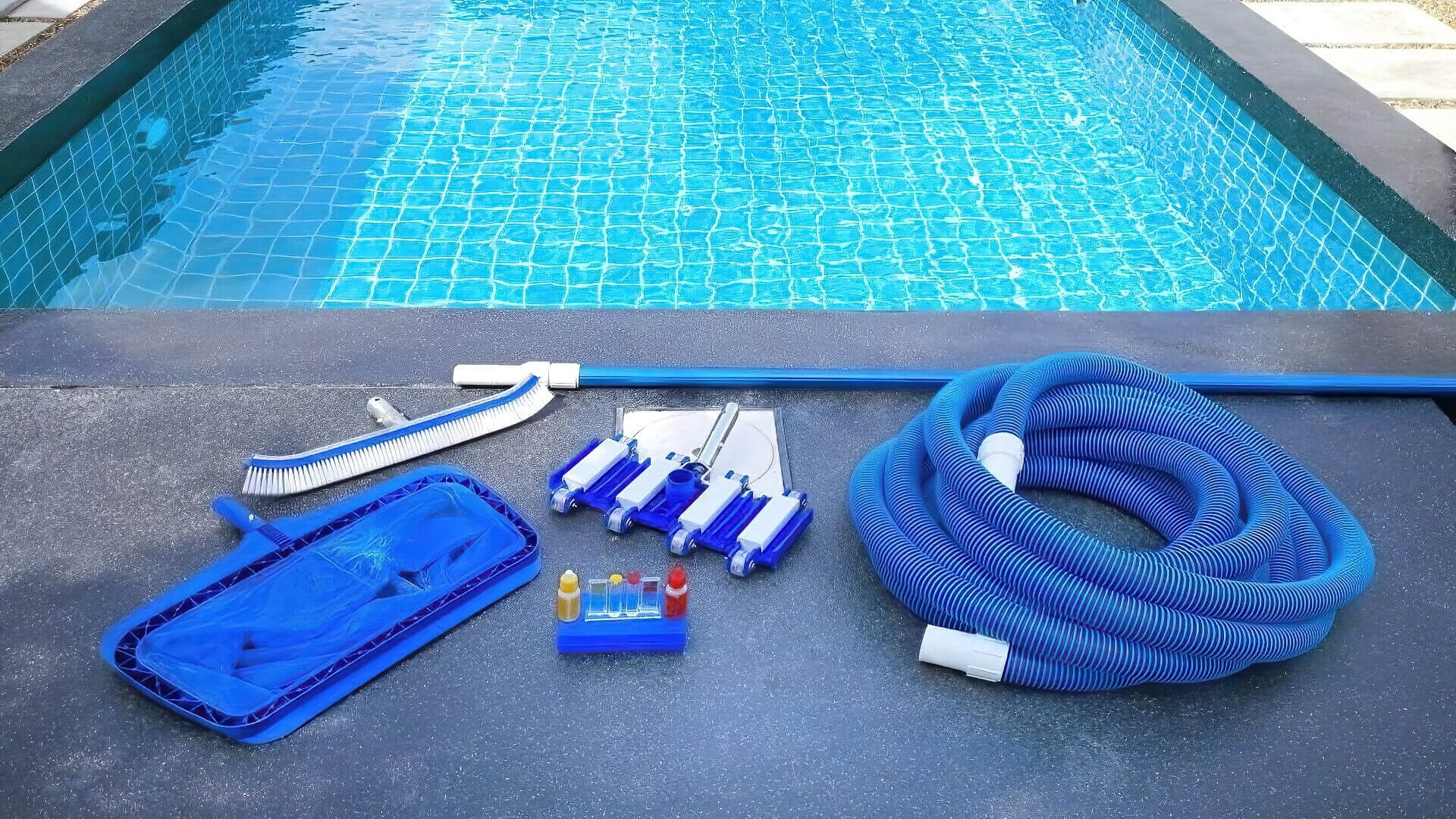
Many pool problems can be reduced with simple physical cleaning before chemicals are needed. Skimmers, brushes, vacuums and automatic cleaners are often more appropriate for debris than adding another product to the water.
Leaves, dirt and settled organic material should be physically removed whenever possible. Adding chemicals does not remove that material from the pool and may simply increase the amount of work the sanitizer and filter have to perform.
A good maintenance routine combines chemical treatment with physical cleaning rather than relying too heavily on one or the other.
Choose the Right Brush for the Pool Surface
Pool brushes are not all interchangeable. Some surfaces can tolerate stiffer bristles, while others require softer tools to avoid scratching or unnecessary wear.
Using the wrong brush can damage the finish or fail to remove stubborn buildup effectively. Homeowners should confirm the recommended brush type for their pool surface before using aggressive tools.
Brushing should also be focused on areas where circulation is weaker, including steps, corners and other places where algae or debris tends to collect.
Choose a Vacuum or Cleaner Based on the Debris You Actually Have
Different pool cleaners perform better with different types of debris. Fine sand, large leaves and small organic particles may not all be handled equally well by the same cleaner.
Robotic cleaners, suction-side cleaners, pressure-side cleaners and manual vacuum systems each have different strengths. The right choice depends on pool design, debris type, circulation system and how much manual cleaning you want to perform.
An automatic cleaner can reduce workload, but it should not be expected to replace brushing, water testing or filter maintenance.
Saltwater Pools Still Need the Right Cleaning Products
Saltwater pools are not chemical-free pools. They still use chlorine, but the chlorine is generated from dissolved salt through the salt cell.
These pools still need pH control, alkalinity management, stabilizer, calcium balance, cleaning and filtration. Salt cells may also develop scale that needs to be addressed according to the manufacturer's guidance.
Products used in a saltwater pool should be compatible with the equipment and should not be selected on the assumption that the pool is maintenance-free.
Avoid Using Household Cleaning Products in the Pool
Household cleaners are not designed for swimming pool systems and may contain detergents, fragrances, surfactants or other ingredients that create foam or interfere with water chemistry.
Even if a product appears to clean a surface effectively, it may introduce substances that are difficult to remove from the water afterward.
Use products specifically intended for pools and compatible with the surface or equipment being cleaned.
Do Not Mix Pool Chemicals
Pool chemicals should never be mixed together unless the product instructions specifically direct otherwise. Combining incompatible chemicals can create dangerous reactions, fumes, heat or fire risk.
Chemicals should be stored separately, kept dry and handled according to the manufacturer instructions. Always use clean, dedicated measuring tools and avoid adding different products into the same container.
When several adjustments are required, follow label guidance regarding application order and waiting periods instead of combining products to save time.
Read the Product Label Before Every Use
Even if you have used a similar product before, read the label because concentration, application rate and instructions can vary between brands.
The correct dose depends on pool volume and the reason the product is being used. Adding more than recommended does not necessarily solve the problem faster and may create new chemistry issues.
Product labels also provide important information about storage, personal protective equipment and whether the pool should remain unused for a period after treatment.
More Chemical Is Not Better
Over-treating the water is one of the easiest ways to make pool maintenance more complicated. Large or unnecessary doses can push chemistry outside the desired range and create a cycle where another product is needed to correct the first adjustment.
If a normal dose does not solve the problem, the answer is not always to keep adding more. Re-test the water and reconsider whether the original diagnosis was correct.
Recurring issues often point toward a broader maintenance problem involving circulation, filtration or water balance rather than insufficient product.
Choose Products Based on Pool Volume
Chemical dosing is usually based on the amount of water in the pool, so estimating volume incorrectly can lead to under-treatment or over-treatment.
Before applying concentrated products, make sure you have a reasonable understanding of the pool's volume. If the pool shape is unusual or you are unsure, a professional can help estimate it more accurately.
Using the correct volume makes every chemistry adjustment more predictable and reduces unnecessary corrections.
Do Not Buy a Product Just Because It Promises a Quick Fix
Pool products often use strong marketing language, but water problems still follow basic chemistry and circulation principles. A product that promises instant clarity cannot compensate for a failed filter, and an algaecide cannot replace consistently adequate sanitizer.
When evaluating a product, ask what problem it actually solves and whether that matches what is happening in the pool.
The most effective maintenance products are the ones used for a clearly identified reason, not the ones with the biggest claims on the label.
Recurring Problems May Not Need Another Product
If you keep buying products for the same problem, it may be time to stop treating the symptom and investigate the system.
Recurring cloudy water may point to poor filtration. Repeated low chlorine may involve CYA or organic demand. Algae in the same corner may indicate weak circulation. Rising filter pressure may indicate a filtration problem rather than dirty water.
In these situations, adding another chemical can delay the real diagnosis.
If circulation or equipment is contributing to the problem, Aqua Clear FL Pools provides pool equipment repair when the issue goes beyond routine maintenance.
Professional Pool Service Can Reduce Unnecessary Product Use
One advantage of consistent professional maintenance is that products can be used based on regular testing and observation rather than guesswork. When the pool is checked every week, chemistry trends and equipment changes become easier to identify.
This can reduce unnecessary chemical corrections because the pool is kept closer to its normal range instead of repeatedly moving between extremes.
Routine cleaning also removes debris physically, which reduces the amount of work the sanitizer and filtration system need to perform.
Choose Pool Cleaning Products Based on Diagnosis, Not Guesswork
The right pool cleaning product depends on the problem you are trying to solve. Chlorine is for sanitation, filter cleaners are for compatible filter media, stain treatments depend on the stain source and surface cleaners need to match the pool finish. Clarifiers, flocculants, enzymes and other specialty products all have specific uses, but none should be treated as universal solutions.
The most reliable process is to inspect the pool, test the water when chemistry is involved, check circulation and filtration, and then select the product that matches the confirmed problem. This approach reduces unnecessary chemical use and helps prevent one maintenance issue from turning into several.
If you would rather not manage product selection, testing and weekly cleaning yourself, Aqua Clear FL Pools provides weekly pool maintenance in Port St. Lucie with routine cleaning, water balancing and ongoing pool care.
Request a pool service quote and keep your pool maintenance focused on what the water and equipment actually need.


